
How Long Is a Youth Soccer Game? Lengths by Age (Australia)
Every Australian youth soccer game length from Under 6 to Under 18, explained by a coach who has been on the sideline for all of them.
Written by: JC | Updated: March, 2026 | 8 min read

After 30 years coaching youth soccer across junior, NPL and representative squads in Australia, the question I get asked more than almost any other is: “How long is my kid’s game?” It sounds simple, but game lengths change at nearly every age group, and the format shifts from small-sided to full 11v11 along the way. Parents arrive at the wrong time. Coaches plan sessions that don’t match what the kids will face on Saturday. And new referees have no idea when to blow the final whistle.
This guide lays out every game length from Under 6 through to Under 18, based on Football Australia’s national guidelines and what actually runs at state and local level. I have included the format, half or quarter structure, halftime length, and total match day time for each age group. If you coach, parent, or play youth soccer in Australia, bookmark this page.
KEY TAKEAWAYS
- Youth soccer game lengths in Australia range from 30 minutes (U6) to 90 minutes (U18), increasing gradually with age and development.
- MiniRoos (U6 to U11) uses small-sided formats: 4v4, 7v7, and 9v9 with shorter halves designed around attention spans and physical capacity.
- The shift to 11v11 happens at U12/U13, and game times extend from 60 minutes through to 90 minutes at U18.
- Tournament and carnival formats often reduce game lengths, so always check event-specific rules.
- Each age group below has its own section covering format, pitch size, halves and match day timing, from U6 through to U18.
Youth Soccer Game Lengths in Australia: The Full Breakdown
Football Australia sets national guidelines through the MiniRoos program (U6 to U11) and standard junior football rules (U12 to U18). State federations and local associations can make minor adjustments, but the core structure below is consistent across Australia. Here is every age group at a glance.
| Age Group | Format | Half / Quarter Length | Total Playing Time | Halftime |
|---|---|---|---|---|
| Under 6 / Under 7 | 4v4 (no GK) | 2 x 15 min | 30 min | 5 min |
| Under 8 / Under 9 | 7v7 | 2 x 20 min | 40 min | 5 min |
| Under 10 / Under 11 | 9v9 | 2 x 25 min | 50 min | 7.5 min |
| Under 12 / Under 13 | 11v11 | 2 x 30 min | 60 min | 10 min |
| Under 14 / Under 15 | 11v11 | 2 x 30-35 min | 60-70 min | 10 min |
| Under 16 / Under 18 | 11v11 | 2 x 35-45 min | 70-90 min | 10 min |
Note: Some associations still use a quarter format for U6/U7 (4 x 8 min). The trend nationally is moving to halves, but check your local competition rules.
Small-Sided Football: Under 6 to Under 11
The MiniRoos program is Football Australia’s grassroots framework, and it is built around one principle: give kids more touches, more involvement, and more fun. Smaller pitches, fewer players, and shorter games all serve that goal. As Horst Wein outlines in Developing Youth Football Players, the golden age of learning for motor skills falls squarely in this age range, and the game format reflects it.
Under 6 and Under 7 (4v4, 2 x 15 Minutes)
The youngest age group plays 4v4 with no goalkeeper on a pitch roughly 30m x 20m. Games run two 15-minute halves with a 5-minute break. Total match day commitment is about 40 minutes including warm-up. At this age, the focus is participation and enjoyment. There are no league tables, no finals, and no formal results recorded. I have coached this age group dozens of times, and the biggest win is when every kid leaves the pitch wanting to come back next week.
Under 8 and Under 9 (7v7, 2 x 20 Minutes)
At U8/U9, the format steps up to 7v7 with a goalkeeper, played on a roughly 60m x 40m pitch. Halves extend to 20 minutes each. This is where kids start to experience positional play for the first time. In my experience, this is also where you notice the physical gap widening between early and late developers. The 40-minute total game time strikes a good balance for building endurance without burning out players who are still only 7 or 8 years old.
Under 10 and Under 11 (9v9, 2 x 25 Minutes)
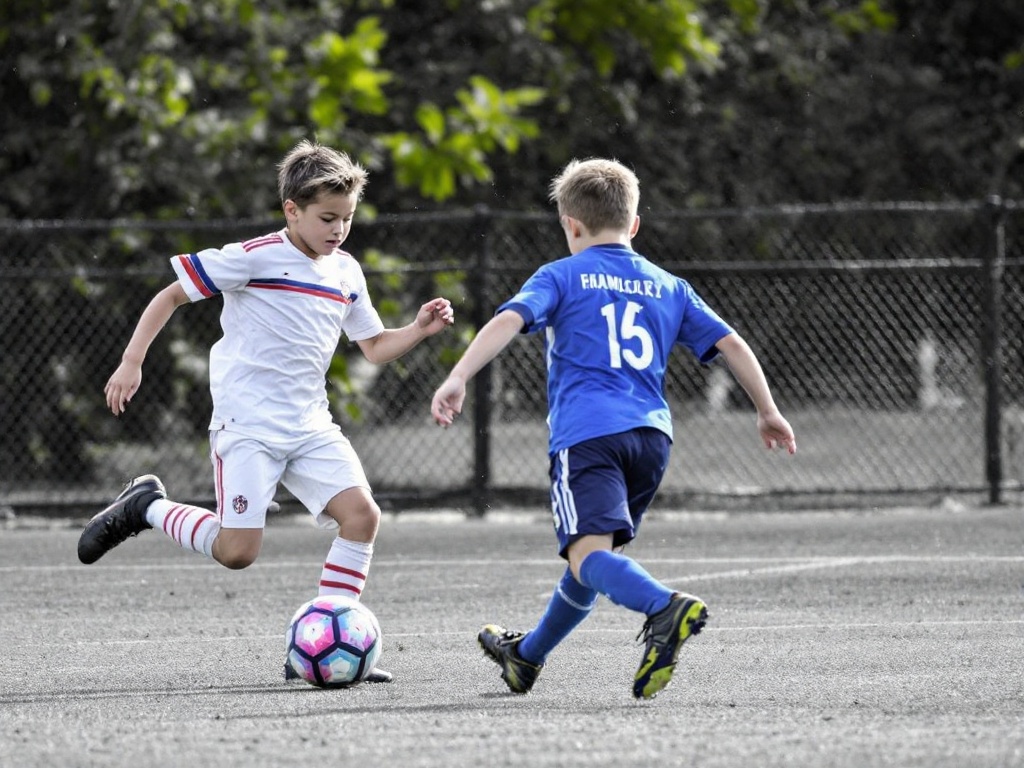
U10/U11 moves to 9v9, which is the bridge between small-sided and full-format football. The pitch is roughly 70m x 50m, and halves are 25 minutes each for a 50-minute total. This is where tactical awareness starts to develop. Players begin to understand shape, cover, and transition. One thing I consistently see at this level: the teams that train at match-appropriate intensity handle the 50-minute game much better than those who only do drills in training. At this age the match ball is a size 4, and a club-standard ball like the adidas Tango Club size 4 ball is the right one to train with.
Junior Football: Under 12 to Under 18
From U12 onwards, the game moves to 11v11 on a full-sized (or near full-sized) pitch. This is a significant transition. Players now need to cover more ground, communicate across longer distances, and sustain effort for longer periods. As Bobby Clark writes in Coaching Youth Soccer, this transition period is where many young players either step up or drop out, and how coaches manage the physical and mental demands makes a real difference.
Under 12 and Under 13 (11v11, 2 x 30 Minutes)
The first full-format age group. Games are 2 x 30-minute halves with a 10-minute halftime. For many players, this is their first experience of a 60-minute match on a full pitch. The halftime break becomes more important here for tactical adjustments and recovery. Substitutions are typically rolling at this level, which helps manage the physical load across the squad.

Under 14 and Under 15 (11v11, 2 x 30-35 Minutes)
At U14/U15, halves extend to 30-35 minutes depending on the competition. NPL and representative pathways tend to run the longer format. This is where physical conditioning becomes a genuine factor. I have seen plenty of talented U14 players get caught out in the final 10 minutes because their fitness base has not kept pace with the game demands. Training should reflect the match duration at this age.
Read the full U14/U15 game length guide →
Under 16 and Under 18 (11v11, 2 x 35-45 Minutes)
The oldest junior age groups play 35-45 minute halves. U16 typically runs 2 x 35 minutes, while U18 moves to 2 x 45 minutes, matching the full senior format. At this level, players in NPL pathways are preparing for senior football. The physical and tactical demands mirror what they will face in state league competitions. Recovery, nutrition, and periodised training all become critical at this stage. So does training with a regulation size 5 ball, and a club option like the adidas EPP II Club ball is a sensible pick for regular sessions.
Why Game Lengths Increase Gradually
The graduated structure is not arbitrary. It follows the physical, cognitive, and emotional development of young players. Younger children have shorter attention spans, lower aerobic capacity, and less ability to process complex tactical information. Throwing an 8-year-old into a 90-minute 11v11 game would be counterproductive and potentially harmful to their long-term development.
Football Australia’s approach aligns with global best practice. Smaller formats at younger ages mean more touches on the ball, more goals, more decisions, and more fun. As players mature, the game expands to match their growing capacity. The research is clear: kids who play age-appropriate formats develop faster and stay in the game longer.
Tournament and Carnival Game Lengths
Tournament formats often compress game lengths to fit multiple matches into a single day. At carnivals like the Kanga Cup or state championship events, you might see halves reduced by 5-10 minutes from the standard. Rolling substitutions are common to manage fatigue across multiple games. Always check the specific tournament rules before game day. I have turned up to carnivals expecting 25-minute halves only to find 15-minute halves and 3-minute breaks.
If your team is playing multiple games in a day, hydration, nutrition, and player rotation become the difference between a strong finish and a complete fade. Plan your squad management before the tournament, not during it.
Common Mistakes Coaches and Parents Make
After 30 years on the sideline, these are the patterns I see repeated every season:
- Training duration doesn’t match game duration. If your U10 team plays 50-minute games, training for 90 minutes is too much. Match your session length to what the players will experience on match day.
- Ignoring the halftime break. At U12 and above, the 10-minute halftime is a coaching opportunity. Have a plan for what you will cover. Standing around with oranges is a wasted opportunity.
- Not adjusting for the format change. The jump from 9v9 to 11v11 at U12 is the biggest transition in junior football. Players need explicit coaching on positioning for the larger pitch.
- Assuming all competitions follow the same rules. Local associations, NPL pathways, school competitions, and tournaments can all have different game lengths. Check before every season and every event.
Conclusion
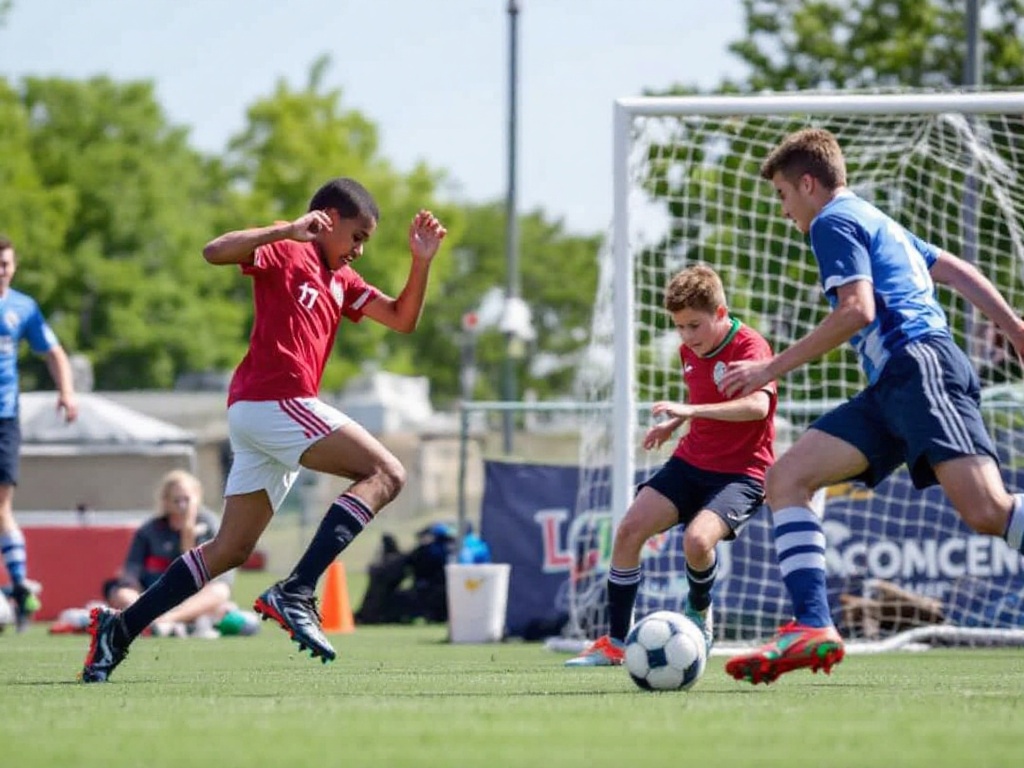
Youth soccer game lengths in Australia follow a clear progression from 30 minutes at U6 through to 90 minutes at U18. Understanding these times helps coaches plan better training sessions, parents organise their Saturday mornings, and players know what to expect. The table above covers every age group under Football Australia’s current guidelines.
After 30 years coaching across every level of Australian youth football, the single most important thing I can tell you is this: the game length matters less than what happens during it. Focus on development, enjoyment, and giving every player the right challenge for their age.
Need the right gear for your age group? See our coaching equipment guide for what we use on the training ground. Looking for the right ball size? Check the soccer ball size chart by age.
Frequently Asked Questions
How long is a youth soccer game with halftime?
Including halftime, youth soccer games range from about 35 minutes (U6, with a 5-minute break) to 100 minutes (U18, with a 10-minute halftime). The halftime length increases as the age group goes up, from 5 minutes at MiniRoos level to 10 minutes at U12 and above.
Are boys’ and girls’ soccer game lengths the same in Australia?
Yes. Football Australia applies the same game length guidelines regardless of gender. MiniRoos and junior football rules are identical for boys’ and girls’ competitions. For a detailed breakdown of the girls’ pathway, see our guide to girls’ soccer game lengths.
What age does soccer go to 11v11 in Australia?
Under 12 is typically the first age group to play 11-a-side in Australia. Before that, MiniRoos uses 4v4 (U6/U7), 7v7 (U8/U9), and 9v9 (U10/U11). The transition to full-format is one of the biggest adjustments in junior football.
Do soccer game lengths vary between states in Australia?
The core structure is set nationally by Football Australia, but state federations and local associations can make minor variations. Some associations still use quarters for U6/U7 instead of halves. Always check your local competition rules at the start of each season.
How long is a soccer game for a 13 year old?
A 13 year old usually plays in the U13 or U14 age group. U13 games run 2 x 30 minute halves, and U14 games run 2 x 30 or 2 x 35 minutes depending on the competition, with a 10 minute halftime. Allow about 90 minutes at the ground once warm-up is included.
How long is a U15 soccer game?
U15 plays the same format as U14: 11v11 with 2 x 30 to 35 minute halves, so 60 to 70 minutes of football plus a 10 minute halftime. NPL and representative competitions usually run the longer 35 minute halves. The U14 and U15 game length guide covers the match day timing in detail.
How long should a youth soccer training session be?
A good rule of thumb is to match training duration to game duration. U6/U7 sessions should be 30-40 minutes. U10/U11 sessions around 50-60 minutes. U14+ sessions can run 60-75 minutes. Going significantly longer than the match length is counterproductive for younger age groups. For the full coaching framework across every age group from MiniRoos to senior, see our complete coaching by age group guide.
ABOUT THE AUTHOR
JC, Elite Champions Coaching
JC has coached at local, representative, and state level for over 30 years. He holds a Masters in Sports Coaching (Griffith University) plus AFC B and FFA B licences, and has served as Technical Director at NPL clubs.


