
Best Portable Soccer Rebounders in Australia (2026): A Coach's Honest Picks
A portable rebounder turns a backyard, a park or a hotel car park into a solo training session. An AFC-licensed coach and a player who trained on rebounders through juniors and into Victorian Country representative squads pick the fold-flat nets and boards worth packing.

A portable soccer rebounder does one job that a fixed board cannot: it folds down, drops in a boot or a kit bag, and turns any flat patch of ground into a solo session. Kick, the ball comes back, repeat, then pack it away in a minute. Jean-Claude Giuca has built rebounder stations into sessions across more than 30 years of coaching, Juniors through NPL, and rates the portable units as much for the reps they unlock away from the club as for what they do in the backyard. Jean-Luc Giuca trained on home rebounder gear as a junior and a senior, and adds the player-side read on why a frame that will not sit square kills a session. Every result on page one for this gear in Australia is a shop listing, so this is the coach’s version instead: what a portable rebounder is genuinely good for, which type suits your player and your space, and the fold-flat nets and boards worth buying here right now.
Are Portable Soccer Rebounders Worth It? A Coach’s Honest Take
For a committed player, yes, and portability is the reason. A rebounder gives a player more first touches in twenty minutes than they get in a full club training session where the ball is shared across a squad, and that volume is where technique is built. The portable versions win because they get used. A fold-flat net that lives in the kit bag comes out at the park before training, in the driveway after school, and in the car park at an away tournament. That is far more contact than a heavy fixed board that only works in one corner of the yard.
The honest caveat is that a portable unit trades a little firmness for that convenience. A packable net returns the ball a touch softer and slower than a rigid mounted board, and a light frame needs the pegs in on grass to stay square under a hard strike. Jean-Claude used portable rebounder circuits in pre-season blocks precisely because they set up anywhere, and it is the use most shop listings never mention. If you only want the firmest possible bounce in one fixed spot, a mounted board is better. If you want a training tool that travels with the player, buy on the features below and put it to work.
The Best Portable Soccer Rebounders at a Glance
🏆 TOP PICK
QuickPlay Spot Target Soccer Rebounder
Best for: Players who want one portable rebounder that sets up fast and travels anywhere
Three sizes, a roughly 90 second setup and a carry bag make this the most versatile portable rebounder for a serious home and away program.
Check Price on Amazon →💰 BEST VALUE
Winthai Soccer Rebounder Net
Best for: Families who want a genuine portable net without spending much
A quick-switch angle net that covers ground passes and lofted feeds, at the sharp end of the price range.
Check Price on Amazon →✨ EDITOR'S CHOICE
SKLZ Quickster Soccer Trainer
Best for: Players who want the most proven pop-up net for solo and volley work
The best reviewed portable pop-up rebounder in this class, light, quick to pitch and packs flat.
Check Price on Amazon →How a Coach Chooses a Portable Rebounder: Angle, Frame and Pack Size
Jean-Claude Giuca has coached Juniors through NPL for more than 30 years and picks equipment by what it does for the player before what it costs. With portable units, four things separate a rebounder that earns its place in the kit bag from one that gets left at home. Setup speed comes first: if a net takes ten minutes and a diagram to pitch, it will not come out before a park session, so a 90 second pop-up wins the reps. Angle range comes second: a net or board you can switch between a low ground return and a lofted feed trains passing, control and volleys from one spot, while a single fixed angle teaches one pass and nothing else. Frame stability comes third, and it is where the cheap packs fail. A light frame that will not sit square on grass, or that folds under a firm strike, kills the session, so pegs and a rigid-enough frame matter more than they look. Packed size comes fourth: the whole point is that it travels, so a unit that folds flat into a carry bag beats one that only half-collapses. Jean-Luc Giuca, who trained on home rebounder gear as a junior and a senior, judges a portable unit on whether the frame holds square under a firm strike, not on how it looks in the box.
Best Portable Soccer Rebounders in Australia 2026, Compared
Best Portable Soccer Rebounders in Australia 2026
| Rebounder | Best For | Type | Portability |
|---|---|---|---|
| QuickPlay Spot Target | All-round, fast setup | Pop-up net | Carry bag, 3 sizes |
| Winthai Rebounder Net | Value, families | Angle net | Fold-flat, light |
| SKLZ Quickster | Proven pop-up, solo work | Pop-up net | Packs flat, carry bag |
| QuickPlay Soccer Tekkers | Kids, dual return | Dual net | Light, quick pitch |
| Happy Jump Portable Net | Younger players, small yards | Sprung net | Folds down small |
| Upgrade 3-Angle Board | Hard surfaces, firm bounce | Fold-flat board | Foldable, portable |
Best Portable Rebounder Overall: QuickPlay Spot Target (Top Pick)
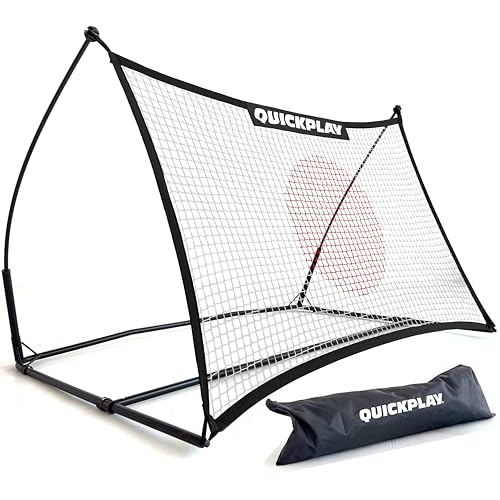
QuickPlay Spot Target Soccer Rebounder
Best for: Players who want one portable rebounder that sets up fast and travels to any surface
The QuickPlay Spot is the portable unit that gets the balance right. It pitches in around 90 seconds with pre-attached poles, packs into a carry bag, and comes in three sizes so you can match it to a junior in the backyard or a teenager working a full session at the park. The rebound face returns a firm, true ball for passing and volley work, and the frame sits square on grass with the pegs in. For a player building a real training habit that follows them from home to the park to an away tournament, the setup speed and portability are the features that keep it in daily use rather than in the shed.
Pros
- Sets up in around 90 seconds and packs into a carry bag
- Three sizes to match the player and the space
- Firm, true return that suits passing and volley work
Cons
- Dearer than a basic fold-flat net
- Larger sizes need the pegs in to stay square on grass
Best Value Portable Rebounder: Winthai Rebounder Net
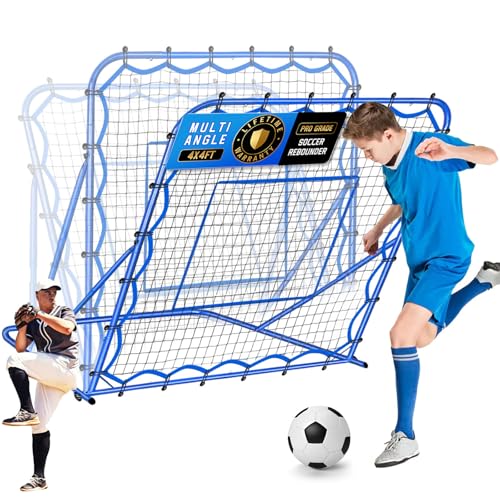
Winthai Soccer Rebounder Net
Best for: Families who want a genuine portable net that switches angles without overspending
The Winthai is the value call in this list. It is a light, fold-flat net with a quick-switch angle setting, so you can drop it to a low ground return for passing or lift it for a lofted feed and some control work. It will not have the polish of the premium pop-ups, but it pitches quickly, packs down small, and does the core job well for a junior learning to receive and pass. For a family that wants an honest portable net without paying premium money, this is where the value sits.
Pros
- Sharp price for a genuine angle-switch rebounder net
- Light and fold-flat, easy to carry to the park
- Two angles cover ground passes and a lofted feed
Cons
- Softer return than a rigid board for high-rep passing
- Light frame needs pegs in to hold square on a hard strike
Most Proven Pop-Up: SKLZ Quickster Soccer Trainer (Editor’s Choice)
SKLZ Quickster Soccer Trainer
Best for: Players who want the most proven portable pop-up for solo passing and volley reps
The SKLZ Quickster is the most reviewed portable pop-up rebounder in this class, and the track record is earned. It springs open, pitches in seconds and folds flat back into its carry bag, so it is genuinely grab-and-go. The net returns a soft, forgiving ball that suits solo passing, volleys and first-touch work in a small space. It is not the firmest return here, but for reliability, quick setup and a proven build, it is the pop-up we would trust to survive a season of real reps.
Pros
- Most proven portable pop-up in this class by a wide margin
- Springs open and folds flat in seconds for grab-and-go use
- Forgiving return suits solo passing and volley reps
Cons
- Softer bounce than a rigid board for high-rep passing
- Pop-up nets wear at the spring points over heavy use

Best for Kids: QuickPlay Soccer Tekkers Trainer
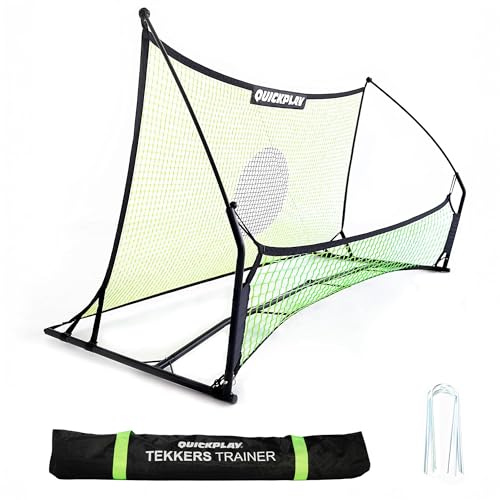
QuickPlay Soccer Tekkers Trainer
Best for: Younger players who benefit from a dual-net return for varied touches
The Tekkers is built around a dual-net design, with a ground-pass return and a raised volley return, which gives a younger player more variety from one light unit. It is quick to pitch, packs down small, and the two return heights keep a junior session interesting rather than one repeated pass. For a primary or early-secondary age player still building a range of touches, the two-in-one return is the friendly, engaging choice, and it travels as easily as the other portable nets here.
Pros
- Dual-net return trains ground passes and volleys from one unit
- Light and quick to pitch for a junior session
- Two return heights keep younger players engaged
Cons
- Return is softer and less firm than an adult board
- Two nets mean a little more to check for tension over time
Best for Small Yards: Happy Jump Portable Rebounder Net
Happy Jump Portable Soccer Rebounder Net
Best for: Younger players and small backyards where a softer, lighter return is safer
A sprung net returns the ball softer and slower than a rigid board, which suits a younger player still learning to cushion and control the ball. The Happy Jump is one of the most popular portable nets on the Australian listings, it is light, packs down small, and its folding design goes up in a minute, so a parent can set it up and pull it down without a fuss. It will not give the firm, fast bounce a teenager grinding technique wants, but for primary-age players and tight spaces it is the friendlier, more forgiving choice and it is easy to store.
Pros
- Soft, slower return is forgiving for younger players learning control
- Very light and packs down small for storage
- Folding design goes up and down in about a minute
Cons
- Softer bounce is less useful for advanced high-rep passing
- Net units wear faster than a board under hard strikes
$86
Check Price on Amazon →
Best Portable Board for Hard Surfaces: Upgrade 3-Angle Foldable Board
Upgrade 3-Angle Foldable Soccer Rebounder Board
Best for: Players who want a firmer, faster board bounce that still folds away
If you want the firm, fast return of a rigid board but still need it to pack away, this foldable three-angle board is the answer. The HDPE face gives a firmer, more predictable bounce than a net, which suits driven ground passing and high-rep first touch, and the three angle settings add some low, mid and lofted variety. It folds flat for storage and travel, so you get most of a fixed board’s bounce quality without giving up portability. It is best on a hard, level surface where the firm return can be used fully.
Pros
- Firmer, faster HDPE bounce than a net for driven passing
- Three angle settings add low, mid and lofted returns
- Folds flat for storage and travel
Cons
- Best on a hard, level surface, less forgiving on soft grass
- Firm return is less suited to very young players

Portable Nets vs Fold-Flat Boards: Which Type Suits Your Space
The two portable types get muddled, and picking the wrong one is the most common mistake. A pop-up or sprung net returns the ball softer and slower, which is kinder for a younger player, safer in a small yard, and packs down the smallest, but it is less firm once technique is solid. A fold-flat board gives the firmest, fastest, most predictable return, which is what you want for grooving a repeatable pass and a sharp first touch on a hard surface, though it wants level ground to work fully. As a rule of thumb: a net for a primary-age player or a small backyard, a fold-flat board for a teenager or adult building technique on a driveway or court, and an angle-switch net like the Winthai or QuickPlay Spot if you want one portable unit to cover both. We break the choice down further in our guide to soccer rebounder net vs board.
How to Train With a Portable Rebounder (Solo Drills That Work)
A rebounder is only as good as the work you put through it, and the portable ones make that work easy to fit in anywhere. Start with two-touch passing: receive across the body, then return with the other foot, working to time rather than a set count so fatigue creeps in. Progress to one-touch returns to sharpen timing, then add a turn between touches to train receiving on the half-turn, the skill that separates players in tight midfield areas. For conditioning, set a running clock and drill receive, turn, return continuously, which is the fitness station Jean-Claude built into pre-season blocks. Weaker-foot reps are where a rebounder pays off most, because no partner is watching and you can grind the reps a player would skip in a group. Our full guide to solo rebounder training lays out a progression you can follow session to session, wherever you have pitched the net.
Where to Use a Portable Rebounder: Backyard, Park and Travel
The whole point of a portable rebounder is that it goes where the player goes. In the backyard it turns ten spare minutes before dinner into real touch volume. At the park it lets a player warm up properly before a session or squeeze in extra reps after one. Packed for an away tournament, it gives a nervous player a familiar routine in a strange car park, which settles the head as much as the feet. Set it on level ground with the pegs in so it stays square, and check the frame and net tension every few weeks so the return stays true. A rebounder is one piece of a home setup, so if you are kitting out a training area our guide to the best home soccer training equipment covers what to pair it with, our soccer rebounders hub is the starting point for every rebounder guide on the site, and our best soccer rebounders for home training guide covers the wider range side by side.
Frequently Asked Questions
Are portable soccer rebounders worth it?
For a committed player, yes. A portable rebounder gives more first touches in twenty minutes than a player gets in a full club session where the ball is shared, and because it packs down and travels it actually gets used, at home, at the park and away. It only pays off if it is used, so pair it with a short, regular routine rather than leaving it in the bag.
What size should a portable soccer rebounder be?
Match the size to the player and the space. A smaller net suits a primary-age player and a small yard and packs down the smallest. A larger face, like the bigger QuickPlay Spot, returns mis-hits better and keeps a full session flowing, which is worth it for a teenager or shared use. If you are unsure, a mid-size angle net covers most players.
What is the best portable soccer rebounder in Australia?
For all-round use, the QuickPlay Spot Target is the strongest pick because it sets up in around 90 seconds, comes in three sizes and packs into a carry bag. The best value option is the Winthai angle net, and the SKLZ Quickster is the most proven pop-up for solo and volley reps.
Can you use a portable rebounder on both grass and hard surfaces?
Yes, with a couple of notes. On grass, use the pegs so a light frame stays square under a firm strike. On hard surfaces like a driveway or court, a fold-flat board gives a firmer, truer bounce and does not need pegging, while a net still works but returns softer. Set any unit on level ground so the return stays predictable.
Are portable rebounders good for kids?
Yes, and a softer sprung or pop-up net like the Happy Jump or the QuickPlay Tekkers suits younger players best, because the slower, gentler return is easier to control and safer in a small yard. Older juniors and teenagers benefit from a firmer angle net or a fold-flat board that returns the ball fast and true. Always set it on level ground with the pegs in.


