
Best Soccer Wall Rebounders in Australia (2026): A Coach's Honest Picks
A soccer wall rebounder is the cheapest way to double a player's touches at home. An AFC-licensed coach and a player who trained on rebounders from juniors to Nationals prep pick the boards and nets that actually earn their place.

A soccer wall rebounder does one thing better than almost any other piece of home gear: it compresses touch volume into a small space and needs no partner. Kick the ball, it comes straight back, and you repeat. Jean-Claude Giuca has built rebounder stations into sessions across more than 30 years of coaching, Juniors through NPL, and rates them as much for conditioning as for skill, because a player receiving and returning under fatigue gets fit and sharp at the same time. Jean-Luc Giuca trained on rebounders from juniors through to Nationals prep, and adds the player-side read on which units hold up to real reps and which rattle apart after a fortnight. Every result on page one for this gear is a shop listing or a build-it-yourself video, so this guide is the coach’s version instead: what a rebounder is genuinely good for, which type suits your player, and the boards and nets worth buying in Australia right now.
Are Soccer Wall Rebounders Worth It? A Coach’s Honest Take
For a committed player, yes, and the reason is simple maths. A rebounder gives a player more first touches in twenty minutes at home than they get in a full club training session, where the ball is shared across a squad. That volume is where technique is actually built. The honest caveat is that a rebounder rewards the player who uses it. Left in the shed it does nothing, but paired with ten focused minutes before dinner it quietly turns a decent passer into a sharp one over a season.
The angle you can miss is conditioning. Set a rebounder to a fast return and drill receive, turn, return under a running clock, and you have built a fitness station that also sharpens the first touch. Jean-Claude used rebounder circuits inside pre-season blocks for exactly this reason, and it is the use most shop listings never mention. If you only want a partner for casual kicks in the backyard, a cheap board is plenty. If you want a genuine training tool, buy on the features below and put it to work.
The Best Soccer Wall Rebounders at a Glance
🏆 TOP PICK
ORIENGEAR Soccer Rebounder (8 Adjustable Angles)
Best for: Players who want one rebounder that covers ground passes to aerial control
Eight angle settings and a 40 by 40 inch face make this the most versatile rebounder for a serious home program.
Check Price on Amazon →💰 BEST VALUE
GENKI Portable Soccer Rebounder Board (100x42cm)
Best for: Families who want a solid passing board without spending much
The standard 100x42cm two-angle board sold across the major retailers, at the sharpest end of the price range.
Check Price on Amazon →✨ EDITOR'S CHOICE
MINYII Football Rebounder Board (100x40cm HDPE)
Best for: Players who want a firmer, more durable board for high-rep passing
A sturdier HDPE board that holds its bounce through heavy use, a step up from the entry boards.
Check Price on Amazon →How a Coach Chooses a Rebounder: Angles, Surface and Build Quality
Jean-Claude Giuca has coached Juniors through NPL for more than 30 years and picks equipment by what it does for the player before what it costs. Three things separate a rebounder that earns its place from one that gathers dust. Angle range comes first: a board fixed at one flat angle teaches a single ground pass, while an adjustable unit lets you drill low driven passes, chest and thigh control, and headers from the one spot. Surface comes second: a rigid HDPE board gives a firm, fast, predictable return that mirrors a real pass, while a sprung net returns the ball softer and slower, which is kinder for a younger player still learning to cushion the ball. Build quality comes third, and it is where the cheap units fail. A rebounder takes hundreds of strikes a week, so weak hinges, thin frames and flimsy pegs are the parts that rattle loose first. Jean-Luc Giuca, who trained on rebounders from juniors to Nationals prep, judges a unit on whether it still sits square and true after a month of real reps, not on how it looks in the box.
Best Soccer Wall Rebounders in Australia 2026, Compared
Best Soccer Wall Rebounders in Australia 2026
| Rebounder | Best For | Type | Price (AUD) |
|---|---|---|---|
| ORIENGEAR 8-Angle Rebounder | All-round, angle variety | Adjustable net | $164 |
| GENKI Rebounder Board 100x42cm | Value, families | Rigid board | $80 |
| MINYII HDPE Rebounder Board | Durable high-rep passing | Rigid board | $97 |
| VEVOR Folding Rebounder | Durability, heavy use | Adjustable net | $164 |
| Happy Jump Portable Rebounder Net | Younger players, small yards | Sprung net | $86 |
| SKLZ Star-Kick Solo Trainer | Tight spaces, no wall | Tethered trainer | $52 |
Best Rebounder Overall: ORIENGEAR 8-Angle Rebounder (Top Pick)
ORIENGEAR Soccer Rebounder (8 Adjustable Angles)
Best for: Players who want one rebounder that trains ground passes, control and aerial work
The eight angle settings are what lift this above the fixed boards. Set it low and it fires a driven ground pass straight back; tilt it up and the same unit feeds balls for chest control, thigh cushioning and headers. The 40 by 40 inch face is generous enough that mis-hits still come back, which keeps a solo session flowing instead of stopping to chase the ball. For a player building a real home program, the angle range is the feature that keeps a rebounder useful for years rather than weeks.
Pros
- Eight angle settings cover ground passes, control and aerial work from one unit
- Large 40 by 40 inch face returns mis-hits so solo sessions keep flowing
- Folds down for storage and travel to training
Cons
- Dearer than a basic two-angle board
- Net return is softer than a rigid board, so the bounce is a touch slower
$164
Check Price on Amazon →
Best Value Rebounder: GENKI Portable Board 100x42cm
GENKI Portable Soccer Rebounder Board (100x42cm)
Best for: Families who want a genuine passing board without overspending
This is the standard 100x42cm two-angle board that turns up under half a dozen different names across Amazon, Kmart, BIG W and Harvey Norman. It does the core job well: a firm, fast return for ground passing and first touch, with a second angle for a slightly lofted feed. It will not train headers or high control, but for a junior learning to pass and receive, or a family that wants an honest backyard board around $80, it is the value call in this list.
Pros
- Sharpest price of any genuine rebounder board here, usually around $80
- Firm, fast return that suits ground passing and first touch
- Light and portable, easy to move around the yard
Cons
- Only two angles, so no real aerial or heading work
- Lighter frame needs the pegs in to stay put on a hard return
$80
Check Price on Amazon →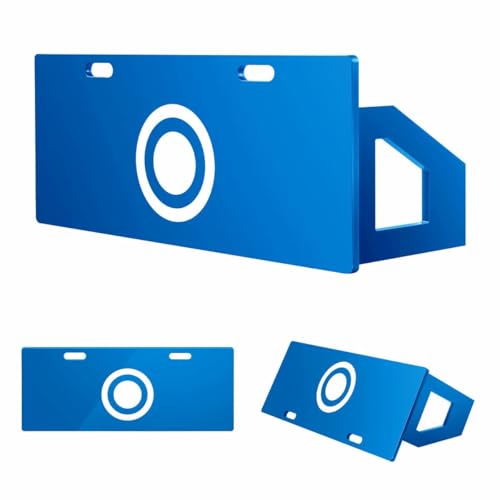
Best Board for High-Rep Passing: MINYII HDPE Rebounder Board (Editor’s Choice)
MINYII Football Rebounder Board (100x40cm HDPE)
Best for: Players who want a firmer, longer-lasting board for heavy passing reps
A step up from the entry boards, the MINYII uses a thicker HDPE panel that holds its bounce through heavy use rather than flexing and softening over a season. For a player grinding out hundreds of passes a week, that firmer, more consistent return is worth the small premium over the value board, because the ball comes back the same way every time and lets you groove a repeatable technique.
Pros
- Thicker HDPE panel keeps a firm, consistent return through heavy use
- Well rated for build quality against the cheaper boards
- Ideal for high-volume passing and first-touch reps
Cons
- Still a fixed board, so limited for aerial or heading work
- A little heavier to move than the entry boards
$97
Check Price on Amazon →
Most Durable Rebounder: VEVOR Folding Adjustable Rebounder
VEVOR Folding Adjustable Rebounder
Best for: Households after a heavy-duty rebounder that stands up to daily use across sports
VEVOR is the brand that dominates the rebounder listings in Australia, and the folding adjustable model is built heavier than most, with a sturdier frame and adjustable angles for varied returns. It doubles across soccer, and other bounce-back sports if the household plays them, which is part of why it holds up: it is engineered for repeated hard strikes rather than casual backyard use. If longevity is the priority and the budget stretches, it is the safe long-term buy.
Pros
- Heavier frame built to survive repeated hard strikes
- Adjustable angles for a range of returns
- Folds flat for storage between sessions
Cons
- Priced at the top of the mainstream range
- Heavier to carry and set up than a simple board
$164
Check Price on Amazon →
Best for Younger Players: Happy Jump Portable Rebounder Net
Happy Jump Portable Soccer Rebounder Net
Best for: Younger players and small backyards where a softer, lighter return is safer
A sprung net returns the ball softer and slower than a rigid board, which suits a younger player still learning to cushion and control the ball. The Happy Jump is light, packs down small, and goes up in a minute, so it is easy for a parent to set up and pull down. It will not give the firm, fast bounce a teenager grinding technique wants, but for primary-age players and tight spaces it is the friendlier, more forgiving choice.
Pros
- Soft, slower return is forgiving for younger players learning control
- Very light and packs down small for storage
- Quick to set up and take down
Cons
- Softer bounce is less useful for advanced high-rep passing
- Net units wear faster than a rigid board under hard strikes
$86
Check Price on Amazon →
Best No-Wall Alternative: SKLZ Star-Kick Solo Trainer
SKLZ Star-Kick Solo Soccer Trainer
Best for: Players in tight indoor spaces who cannot set up a rebounder board
This is not a wall rebounder, and we include it honestly as the alternative for players who have no room for one. The Star-Kick straps the ball to an elastic cord and waistband so it returns after every strike, which trains a repeated first touch and strike in a space smaller than a rebounder needs. It is the most reviewed solo trainer in this class for a reason: it is cheap, portable and genuinely useful for touch reps, even if it does not replicate a real pass off a surface.
Pros
- Works in a tiny space with no wall or board needed
- Cheapest option here and highly portable
- Well proven for repeated first-touch and striking reps
Cons
- Tethered ball does not replicate a real pass off a surface
- Cord and stitching are the wear points over time
$52
Check Price on Amazon →
Wall Rebounder vs Net vs Board: Which Type Suits Your Player
The three types get muddled, and picking the wrong one is the most common rebounder mistake. A rigid board gives the firmest, fastest, most predictable return, which is what you want for grooving a repeatable pass and a sharp first touch. A sprung net returns the ball softer and slower, which is kinder for a younger player and safer in a small space, but less useful once technique is solid. An adjustable-angle unit, board or net, is the most versatile, because it lets you train low passes, high control and headers from the one spot. As a rule of thumb: a board for a teenager or adult building technique, a net for a primary-age player, and an adjustable unit if you want one rebounder to grow with the player. We break the choice down further in our guide to soccer rebounder net vs board vs wall.
Best Wall Rebounders by Age and Training Goal
Match the rebounder to who is using it and why. For a primary-age player learning to receive and pass, the softer Happy Jump net or an entry board like the GENKI is plenty, and the lower return speed helps rather than hinders. For a teenager grinding technique, step up to the firmer MINYII board or the ORIENGEAR for its angle range, so the ball comes back fast and true and the reps count. For an adult or a player doing conditioning work, the ORIENGEAR or VEVOR handle the sustained hard strikes of a fitness circuit best, and their adjustable angles let you vary the drill. And for the coach or club buying for a group, the durability of the VEVOR is the call, because shared gear takes far more punishment than a single player’s home board.
How to Train With a Wall Rebounder (Solo Drills That Work)
A rebounder is only as good as the work you put through it. Start with two-touch passing: receive across the body, then return with the other foot, for a set time rather than a set count so fatigue creeps in. Progress to one-touch returns to sharpen timing, then add a turn between touches to train receiving on the half-turn, the skill that separates players in tight midfield areas. For conditioning, set a running clock and drill receive, turn, return continuously, which is the fitness station Jean-Claude built into pre-season blocks. Weaker-foot reps are where a rebounder pays off most, because no partner is watching and you can grind the reps a player would skip in a group. Our full guide to solo rebounder training lays out a progression you can follow session to session.
DIY vs Buying a Soccer Rebounder: Is a Homemade One Worth It?
There is a healthy corner of the internet showing how to build a rebounder from timber and plywood for around $50, and for a handy parent it is a fair project. A solid plywood board mounted at a fixed angle gives a firm, fast return that rivals the entry boards, and it will not blow over in the wind. The trade-offs are real though: a homemade board is heavy and fixed, so you lose the adjustable angles and the fold-down portability of the bought units, and a poorly built one splinters or works loose under repeated strikes. If you enjoy the build and only need a flat passing return, DIY is genuinely worth it. If you want angle variety, portability and a unit that just works out of the box, the boards above cost little more than the materials and save the weekend.
Where to Buy a Soccer Wall Rebounder in Australia and What to Pay
The standard 100x42cm board sells across Amazon, Kmart, BIG W and Harvey Norman for roughly $78 to $100, so it is worth a quick price check across them before you buy. Amazon carries the widest spread of boards, adjustable nets and solo trainers with fast shipping to most cities, which is why the picks above sit there. Rebel Sport and specialist football retailers stock the premium end, including heavy pro units like the FORZA rebound wall and HART wall-mounted rebounder around $360, which are built for clubs rather than backyards and are worth it only if a group is hammering them daily. A rebounder is one piece of a home setup, so if you are kitting out a training area our guide to the best home soccer training equipment covers what to pair it with, our soccer rebounders hub is the starting point for every rebounder guide on the site, and our best soccer rebounders for home training guide covers the wider range side by side.
Frequently Asked Questions
Are soccer rebounders worth it?
For a committed player, yes. A rebounder gives more first touches in twenty minutes at home than a player gets in a full club session where the ball is shared, and that volume is where technique is built. It only pays off if it gets used, so pair it with a short, regular routine rather than leaving it in the shed.
What is the best soccer wall rebounder in Australia?
For all-round use, the ORIENGEAR eight-angle rebounder is the strongest pick because its adjustable angles cover ground passes, control and aerial work. The best value option is the standard 100x42cm board sold across Amazon, Kmart and BIG W for around $80, and the MINYII HDPE board is the pick for firmer, high-rep passing.
What size soccer wall rebounder should I get?
The common 100x42cm board suits one player working on passing and first touch and stores easily. A larger 40 by 40 inch face, like the ORIENGEAR, returns mis-hits better and keeps a solo session flowing, which is worth it for a serious program or shared use. Match the size to the space you have and how many players will use it.
Wall rebounder or rebound net: which is better?
A rigid board gives a firmer, faster, more predictable return that suits a teenager or adult grooving technique. A sprung net returns the ball softer and slower, which is kinder for a younger player and safer in a small space. Choose the board for high-rep passing and the net for younger players still learning to cushion the ball.
How do you use a soccer wall rebounder for solo training?
Start with timed two-touch passing, receiving across the body and returning with the other foot, then progress to one-touch returns and add a turn between touches. Set a running clock for a conditioning version, and prioritise weaker-foot reps, which are the ones a player skips in a group. Work to time rather than count so fatigue builds.
Can kids use a soccer wall rebounder?
Yes, and a softer sprung net like the Happy Jump suits younger players best because the slower, gentler return is easier to control and safer in a small yard. Older juniors and teenagers benefit from a firmer board that returns the ball fast and true. Always set a rebounder on level ground with the pegs in so it stays square under a hard strike.


