
Best Ankle Guards for Soccer in Australia (2026): A Coach's Picks
Sorted by an AFC-credentialled coach with 30+ years across Juniors to NPL, and kit-tested from the player's side.

Search “ankle guards soccer” in Australia and you land on retailer category pages and a wall of near-identical listings, with no one actually explaining what you are buying. Here is the thing most pages skip: “ankle guards” covers two very different products. There are the soft dual-sided pads that slip down either side of the ankle inside your sock, and there are the structured braces a player reaches for when they want a firmer, locked-in feel. They solve different problems. I have coached across Juniors to NPL for 30 years and sorted plenty of gear bags, and my son wore this kind of kit through his own playing days, so this guide separates the two, matches each to how you play, and keeps it to what the Laws of the Game and your local league actually allow. Nothing here is medical advice: if you have an ongoing ankle issue, that is a conversation for a physio, not a shopping list.
Ankle guards vs ankle braces: what the term means in soccer
When a parent asks me for “ankle guards”, they usually mean the soft foam pads that come attached to cheaper shin guards, the ones that cup the inside and outside of the ankle. Those are impact pads. They take the sting out of a stray boot or a clash of ankles in a tackle, and for a lot of grassroots players that is all they want. The second thing people mean is a support brace: a neoprene sleeve, an adjustable wrap or a lace-up that hugs the joint and limits how far it rolls. That is a support product, and it feels completely different on the foot. Neither is better in the abstract. The soft pad is about cushioning contact; the brace is about how held the joint feels. Work out which problem you are solving first, because it changes everything about what you buy.
One more distinction worth making early. A brace is not a cure for a dodgy ankle, and I am careful not to sell it as one. Some players simply prefer the reassurance of something firm around the joint, the same way some like a tight boot and others like room in the toe. That is a comfort and confidence call. If you have had a serious ankle problem, get it looked at properly and take the advice you are given there. What this guide can do is tell you which products are worth your money on an Australian budget and how they actually wear on the pitch.
How I picked these (a coach’s test, not a spec sheet)
I care about three things with protective kit, in this order. First, does it get worn? The best guard in the world is useless in the bottom of a bag, so it has to be comfortable enough that a kid or a busy adult actually puts it on every week. Second, does it stay put? Anything that slides down inside the sock by half-time is a nuisance and stops doing its job. Third, is it legal and sensible for the level? A senior playing men’s state league has different needs to an under-10 on a Saturday. I have weighted this list toward gear that is easy to live with, easy to buy in Australia, and honest about what it does. Prices below are indicative and move around, so treat them as a guide and check the live figure before you buy.
The quick picks
🏆 TOP PICK
Dual-Sided Ankle Guard Pads
Best for: Most outfield players who want simple impact protection
The classic soft ankle guard: light, cheap and easy to wear under the sock.
Check Price on Amazon →💰 BEST VALUE
Bodyprox Ankle Support Brace
Best for: Players who want a firmer, held feel
Breathable sleeve with an adjustable strap and a huge base of happy buyers.
Check Price on Amazon →👟 BEST FOR YOUTH
BraceUP Kids Ankle Support
Best for: Junior players
Sized and adjustable for smaller feet, so it actually stays on.
Check Price on Amazon →Do you need ankle guards as well as shin guards?
Shin guards are compulsory in almost every organised match in Australia. Ankle guards are not, and plenty of good players never wear them. So the honest answer is: only if you want them. If you play in midfield or up front and take a lot of contact around the boot, a soft ankle pad is cheap insurance and you will barely feel it. If you are a keeper or a centre-back who mostly wins the ball cleanly, you may decide it is more fuss than it is worth. A neat middle path is a shin guard with a built-in ankle protector, which gives you both in one item and one less thing to pack. For a full run at the guards themselves, our guide to the best soccer shin guards for Australia covers the sizing and the fit that matters most, and the shin guard size guide will get the length right before you spend a cent.
The best ankle guards for soccer in Australia (2026)
Dual-Sided Ankle Guard Pads
Best for: Most outfield players who want straightforward impact protection
This is the product most people picture when they say “ankle guards”: two soft pads that sit either side of the ankle inside the sock and take the sting out of contact. They are light, they cost next to nothing, and once the sock is over the top you forget they are there. For the average club player who just wants a bit of cushioning against a stray boot, this is the sensible default and the first thing I would try.
Pros
- Barely noticeable once the sock is on, so it actually gets worn
- Cheap enough to keep a spare pair in the bag
- Legal and unobtrusive for every level of grassroots play
Cons
- Cushions contact only, gives no structural support to the joint
- Thin foam wears out over a hard season and needs replacing
$25
Check Price on Amazon →
Bodyprox Ankle Support Brace
Best for: Players who prefer a firmer, held feel around the joint
If a soft pad is not enough and you like the reassurance of something snug around the ankle, this breathable sleeve with an adjustable strap is the one I point people to first. It has an enormous base of buyers behind it, it breathes well enough to wear for a full match, and the strap lets you dial in how tight it sits. Treat it as a comfort and confidence choice rather than anything clinical, and check it still fits inside your boot before match day.
Pros
- Adjustable strap lets you set how firm it feels
- Breathable enough to wear for a full 90 minutes
- Very large, consistent base of happy buyers
Cons
- Adds bulk, so check it fits inside your boot first
- Support is a comfort preference, not an injury remedy
$18
Check Price on Amazon →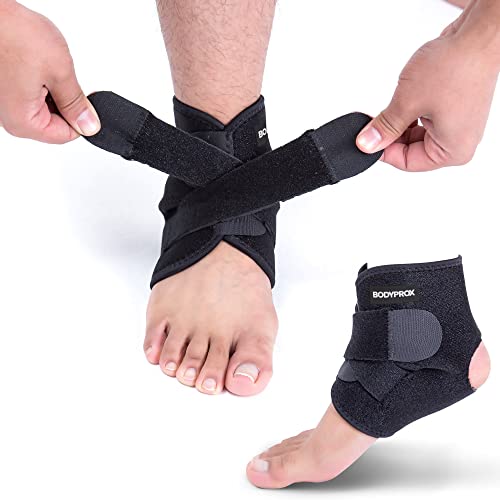
Mitre Aircell Ankle Protection Shin Pads
Best for: Grassroots and junior players who want both in one item
Mitre is a name Australian players know, and this one-piece shin guard with a built-in ankle protector is a tidy way to cover both jobs without packing two bits of kit. It suits younger and grassroots players well, since it is simple to put on and there is nothing extra to lose. If you were only ever going to buy one protective item, a combined shin and ankle guard like this earns its place. It links naturally to our full best soccer shin guards guide if you want to compare the shin side of things.
Pros
- Shin and ankle protection in a single, simple item
- Recognised Australian football brand, CE and SATRA tested
- Easy on and off, which suits younger players
Cons
- The ankle protection is lighter than a dedicated pad or brace
- One-piece designs give less choice on fit than separate items
$37
Check Price on Amazon →
BraceUP Kids Ankle Support
Best for: Junior players who need a proper small fit
The mistake I see most with kids is a scaled-down adult brace that never sits right and ends up ignored. This one is built for smaller feet and adjusts as they grow, which is the whole point: a guard only works if it actually gets worn. For a junior who wants a bit more than a soft pad, this is a sensible, affordable step up. Pair it with correctly sized shin guards and you have the young player sorted; our kids shin pads guide covers that side.
Pros
- Genuinely sized for junior feet, not a shrunk adult version
- Adjustable, so it lasts across a growth spurt
- Affordable enough for a kit bag that gets outgrown fast
Cons
- Younger kids may still find any brace fiddly to fit alone
- Support level is modest by design
$19
Check Price on Amazon →
Zamst A1 Ankle Brace
Best for: Players who want the firmest, most locked-in feel
This is the step up for a player who wants real structure and lock-down around the joint. Zamst is a well-regarded sports brand, and the A1’s three-way straps give a noticeably firmer, more held feel than a soft sleeve. Included here as an ankle support brace for players who want maximum hold, not as a medical recommendation: if you are managing an injury, that is a physio’s call. It is more brace than guard, so be honest with yourself about whether you want that much around the ankle inside a boot.
Pros
- Three-way straps give a firm, structured, locked-in feel
- Well-regarded sports brand with a quality build
- Breathable enough to wear through a match despite the structure
Cons
- Around $100, several times the price of the other picks here
- More brace than guard and bulky in a boot, so try it before you commit
$100
Check Price on Amazon →
At-a-glance comparison
Best Ankle Guards for Soccer in Australia (2026)
| Product | Type | Best For | Price (AUD) |
|---|---|---|---|
| Dual-Sided Ankle Guard Pads | Soft impact pad | Most outfield players | ~$25 |
| Bodyprox Ankle Support Brace | Adjustable sleeve | Firmer held feel | ~$18 |
| Mitre Aircell Ankle Protection Shin Pads | Shin + ankle combo | Grassroots and juniors | ~$37 |
| BraceUP Kids Ankle Support | Junior brace | Junior players | ~$19 |
| Zamst A1 Ankle Brace | Structured brace | Most locked-in feel | ~$100 |
What the Laws of the Game and your league allow
The Laws of the Game are strict about shin guards and quiet about ankle guards. Law 4 requires shin guards to be covered entirely by the socks, made of a suitable material, and to offer a reasonable degree of protection. Ankle guards are not mentioned as compulsory, but the same spirit applies: anything you wear has to be safe for you and for other players, and the referee has the final say on the day. In practice that means no hard, sharp edges exposed, nothing that could injure an opponent, and everything sitting neatly under the sock. Most Australian junior and senior leagues follow the Laws directly here, but a few competitions add their own kit notes, so if you are unsure, a quick check with your club registrar settles it. I have never seen a soft ankle pad or a fabric brace cause an issue, but a rigid support with exposed plastic is the kind of thing a referee is entitled to query.
How to wear ankle guards so they stay put and stay legal
Order matters. A soft ankle pad goes on the bare ankle first, then the shin guard, then the sock pulled up over everything so the lot is covered. A brace or sleeve goes on before the boot and after the sock in most players’ routines, though some prefer it under the sock for a cleaner look: try both and keep whichever stays put for you. The most common complaint I hear is slippage, and it is almost always a sizing problem rather than a product fault. Measure honestly, size for a firm fit that is not cutting off circulation, and if a pad keeps sliding, a thin strip of tape or a sock stay will hold it. Above all, wear it in at training before you rely on it in a match. New kit that pinches or rubs is new kit that gets left in the bag, and protection you are not wearing protects nobody.
Ankle guards for junior players: what changes for kids
With juniors, comfort beats everything. Kids will quietly ditch anything that itches, pinches or feels weird, and you will never know until match day. So for younger players I lean toward the lightest option that does the job: a soft pad, or a shin guard with a built-in ankle protector so there is one less thing to pack and lose. If a junior genuinely wants a brace, size it for them rather than handing down an adult one, because a loose brace does nothing but annoy. And keep an eye on growth. Kit that fit in March is often too small by spring, so build a cheap replacement into the plan rather than stretching a season out of gear that no longer fits. Our kids shin pads guide covers getting the shin guards sized right at the same time, so the whole lower leg is sorted.
How to choose: fit, protection level and playing position
Start with the type, then the fit, then the brand. If you want cushioning against contact, buy a soft pad and spend the least. If you want a held, supported feel, buy a sleeve or brace and accept a bit of bulk in the boot. Match it to how you play: busy midfielders and forwards taking a lot of contact get the most out of ankle protection, while players who win the ball cleanly may not bother. Juniors want light and simple; senior players chasing a specific feel can add an adjustable support brace. And whatever you land on, the deciding test is whether it is comfortable enough to wear every single week, because the only guard that protects you is the one on your ankle. When you are ready to round out the kit, the shin guards hub and the player gear hub are the next two stops.
Frequently asked questions
Are ankle guards necessary for soccer?
No. Shin guards are compulsory in organised Australian matches, but ankle guards are optional. They are cheap, sensible protection against contact for players who want them, especially in midfield and attack, but plenty of good players go without.
What do soccer players wear to protect their ankles?
Two main things: soft dual-sided pads that sit either side of the ankle inside the sock, and support braces or sleeves that hug the joint for a firmer feel. Some shin guards also come with a built-in ankle protector so you get both in one item.
What is the best ankle protection for soccer?
For most outfield players a light dual-sided pad is the sensible default: cheap, legal and barely noticeable. If you want a firmer, held feel, an adjustable support sleeve is the next step. Juniors are best served by kit sized for them or a combined shin and ankle guard.
Is an ankle brace good for soccer, or should I use ankle guards?
It depends on what you are after. A soft ankle guard cushions contact; a brace gives a firmer, supported feel around the joint. Choose the type first based on the problem you are solving, then pick a product. Treat a brace as a comfort and fit preference, not a fix for an ongoing ankle problem.
Can you wear ankle guards under football socks and shin guards?
Yes. A soft ankle pad goes on first, then the shin guard, then the sock pulled up over everything so it is all covered, which also keeps it legal under Law 4. Braces and sleeves are usually worn over the sock and under the boot, though some players prefer them under the sock.
When should you not wear an ankle brace?
If a brace is uncomfortable, cuts off circulation or stops your boot fitting properly, it will do more harm than good and is better left off. And if you have an ongoing or serious ankle issue, get proper advice from a physio rather than relying on a brace bought off a shelf.


